DB-GPT: Your Open-Source AI Data Assistant for Smarter Analytics
DB-GPT is an open-source agentic AI data assistant that connects to databases, writes SQL, runs Python analysis, and generates insights. Here's my hands-on review with real usage examples.

Ever Felt Like Your Data Speaks a Different Language?
I've been there. You stare at a database with millions of rows, knowing the answer is in there somewhere — but writing the perfect SQL query to extract it takes forever. Then you run it, get the numbers, and still need to build a chart, write a summary, and format it for a report. By the time you're done, the question has already changed.
That's exactly the problem DB-GPT solves. And honestly? It does it better than anything else I've tried.
🚀 Want to deploy DB-GPT yourself?
Docker configs, system requirements, and installation guides — all on one page.
View DB-GPT Tool Page →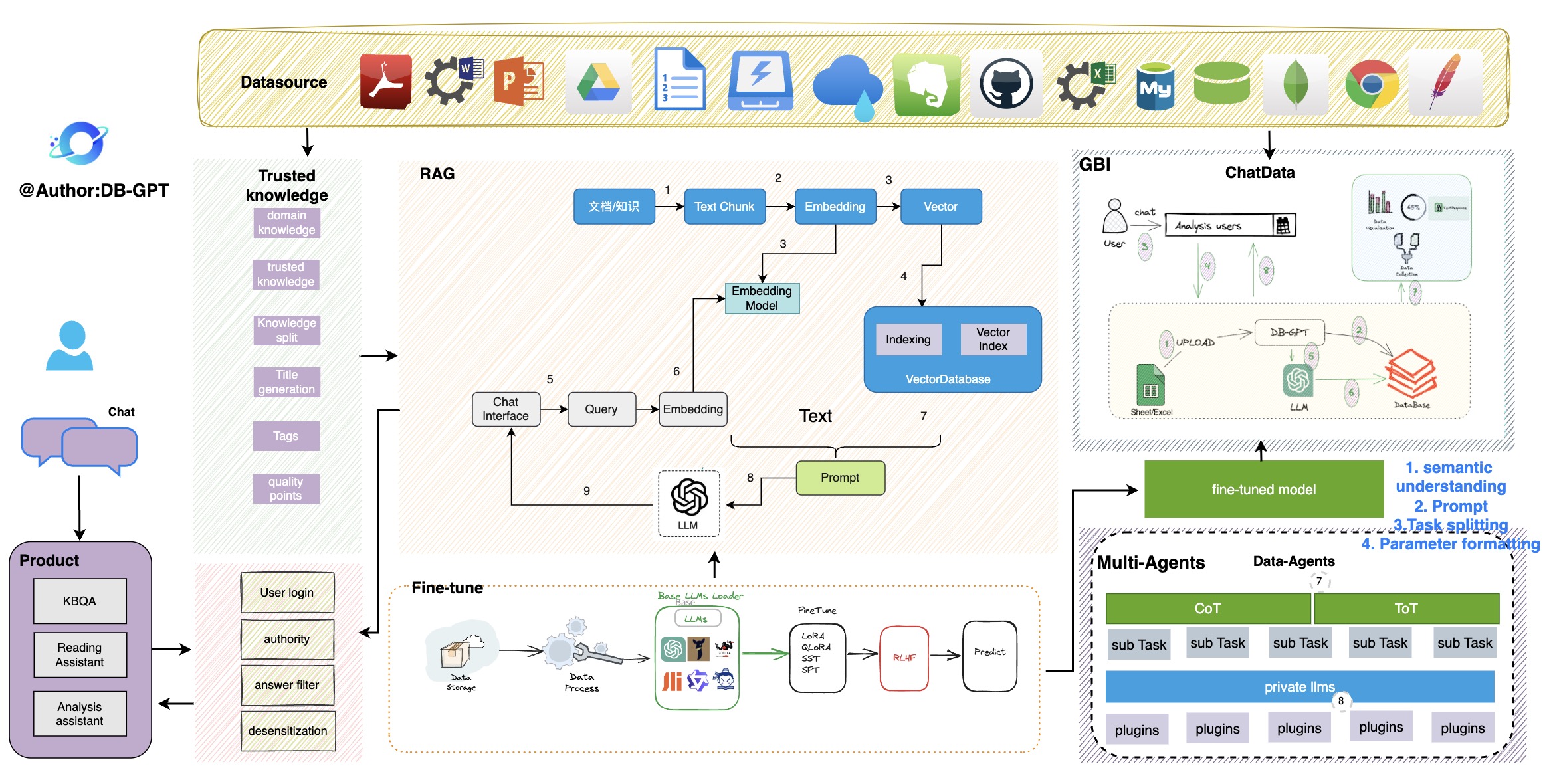
What Makes DB-GPT Different?
There are plenty of "AI for data" tools out there. I tried a few — most felt like wrappers around GPT-4 that could write SQL but couldn't actually do anything with the results. DB-GPT is different.
It's not just a chat interface over your database. It's a full agentic platform that can:
- 🔍 Connect to anything — PostgreSQL, MySQL, ClickHouse, DuckDB, CSV files, Excel, data warehouses, even knowledge bases
- 💬 Understand natural language — ask "show me revenue by region for Q4" and it writes the SQL, runs it, and shows you the result
- 🐍 Run Python code — not just SQL. Clean datasets, compute metrics, build models — all in a sandboxed environment
- 📊 Generate visual outputs — charts, dashboards, interactive HTML reports, analysis summaries
What impressed me most? The AWEL workflow engine. You can chain multiple tasks — query a database, feed results to a Python script, generate a chart, then email it — all as a single automated workflow. I spent about an hour setting this up for a real project and it's been running daily ever since.
Under the Hood
DB-GPT is built with a modular architecture that doesn't lock you into one LLM. It supports OpenAI, Claude, Llama, DeepSeek, Qwen — pretty much everything. The RAG pipeline is solid too: chunk documents, embed them, and let the AI retrieve context before answering.
Key stats: 19K+ GitHub stars, 136K+ Docker pulls, MIT license. The community is active and the docs are genuinely good (both English and Chinese).
Who Is This For?
Honestly? Anyone who works with data. Data analysts who want to move faster, engineers who hate writing boilerplate SQL, product teams who need ad-hoc insights without bugging the data team. But also — and this surprised me — it works well for non-technical users too. The natural language interface is good enough that my marketing colleague could ask questions and get answers without writing a single line of code.
Is it perfect? No. The initial setup takes some effort (more on that in the tutorial). And if you're working with extremely complex queries, you'll still need to review and tweak the generated SQL. But for 80% of data analysis work, DB-GPT saves hours every single day.
Conclusion
DB-GPT is one of those rare open-source tools that actually delivers on the promise of "AI for data." It's not a toy demo — it's a production-ready platform that connects to real databases, writes real code, and produces real insights. After using it for a few weeks, I can confidently say: this is how data analysis should work.
🚀 Explore DB-GPT on Run This Ai
Docker Compose configs, system requirements, installation guides, and more — all in one place.
View DB-GPT Tool Page →