Getting Started with Pydantic AI: The Pythonic Way to Build AI Agents
Discover Pydantic AI — the type-safe Python agent framework built by the Pydantic team. Model-agnostic, durable, and production-ready.

What Is Pydantic AI?
Pydantic AI is a Python agent framework built by the same team that created Pydantic — the validation library used by virtually every major AI framework including OpenAI SDK, LangChain, LlamaIndex, and CrewAI. With over 18,000 GitHub stars, Pydantic AI brings the same ergonomic, type-safe design philosophy that made FastAPI famous to the world of Generative AI agents.
Unlike other agent frameworks that bolt validation on as an afterthought, Pydantic AI is built on Pydantic from the ground up. This means your agents are fully type-safe from day one — your IDE can autocomplete tool definitions, catch errors at write-time instead of runtime, and generate clean, validated outputs every time.
Why Pydantic AI Stands Out
The framework is designed to feel familiar if you have used FastAPI: declarative, type-hinted, and composable. Key differentiators include:
- Model-agnostic — Supports OpenAI, Anthropic, Gemini, DeepSeek, Grok, Ollama, and dozens more providers through a unified interface
- Durable Execution — Agents can survive API failures, application restarts, and network issues without losing progress
- MCP Integration — Native support for the Model Context Protocol gives your agents access to external tools and data
- Human-in-the-Loop — Flag specific tool calls for approval before execution, with conditional logic based on arguments or conversation state
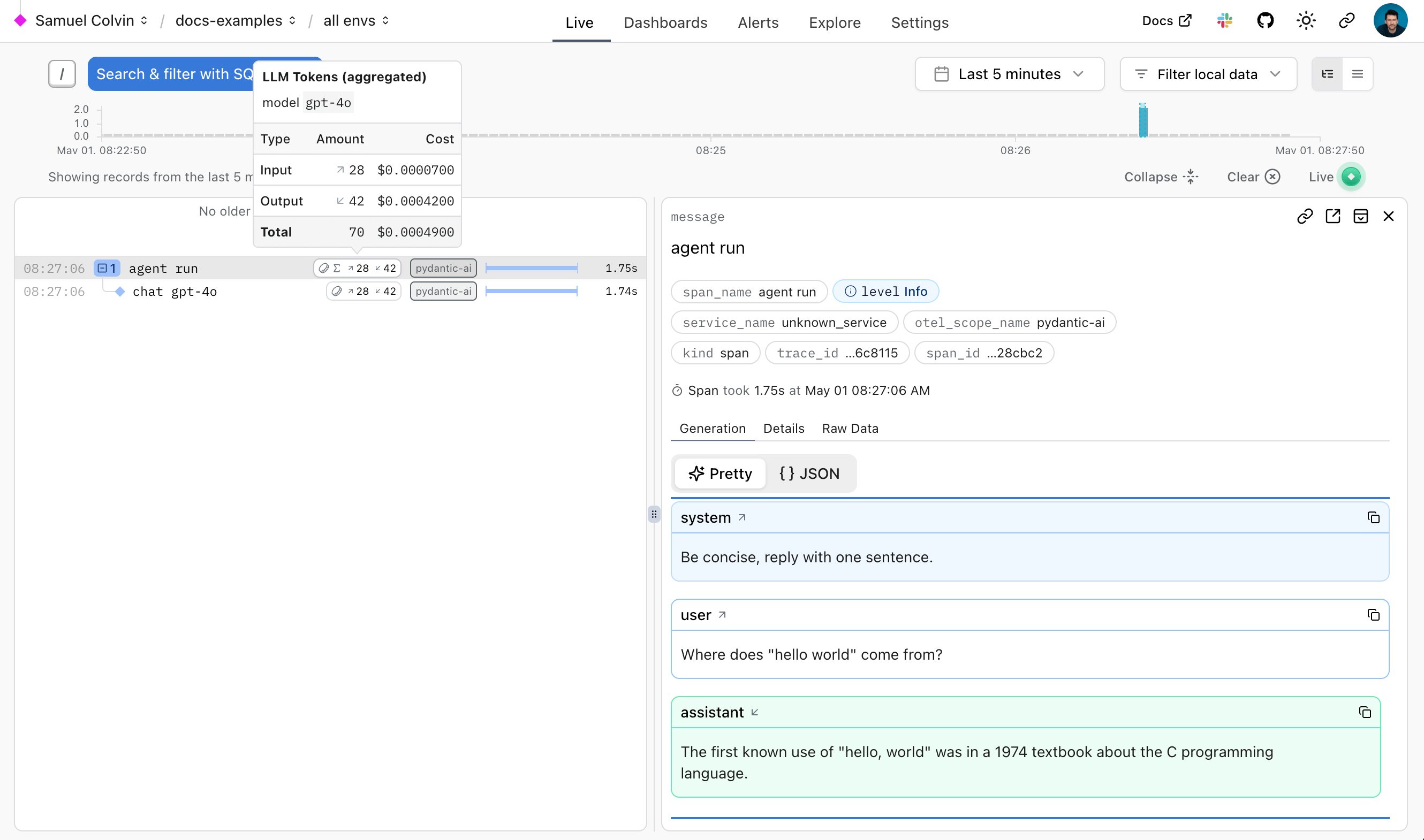
- Built-in Observability — Tight integration with Pydantic Logfire provides real-time debugging, tracing, evals, and cost tracking via OpenTelemetry
- Graph Support — Define complex multi-step workflows using type-hinted graphs instead of spaghetti control flow
Key Features at a Glance
Pydantic AI ships with everything you need for production-grade AI agents: streaming structured outputs with immediate validation, reusable capabilities that bundle tools and instructions, agent specification in YAML/JSON (no code required!), and a growing ecosystem of capability packages. The framework also supports multiple UI event stream standards for building interactive applications.
Who Is It For?
Pydantic AI is perfect for Python developers who want to build reliable, type-safe AI agents without fighting with framework abstractions. If you appreciate well-designed APIs, strong typing, and tools that get out of your way, Pydantic AI will feel like home. It is particularly well-suited for production applications where correctness, observability, and maintainability matter.
Conclusion
Pydantic AI represents a new generation of agent frameworks that prioritize developer experience without sacrificing production readiness. It is open source under the MIT license, actively maintained by the Pydantic team, and backed by a growing community. Whether you are building a simple chatbot or a complex multi-agent system, Pydantic AI gives you the tools to do it the Pythonic way.