Helicone: Open-Source LLM Observability Platform — Complete Guide
Discover Helicone, the open-source LLM observability platform for monitoring, evaluating, and optimizing your AI applications. Self-host with Docker for full data control.

What Is Helicone?
Helicone is an open-source LLM observability platform that gives AI developers complete visibility into their language model applications. With just one line of code, you can start tracking every request made to any LLM provider — capturing latency, token usage, cost, and full request/response payloads. Built by the Y Combinator-backed team (W23), it has become a go-to tool for teams building production AI applications who need transparency, debugging capabilities, and performance optimization across the entire LLM stack.
Key Features
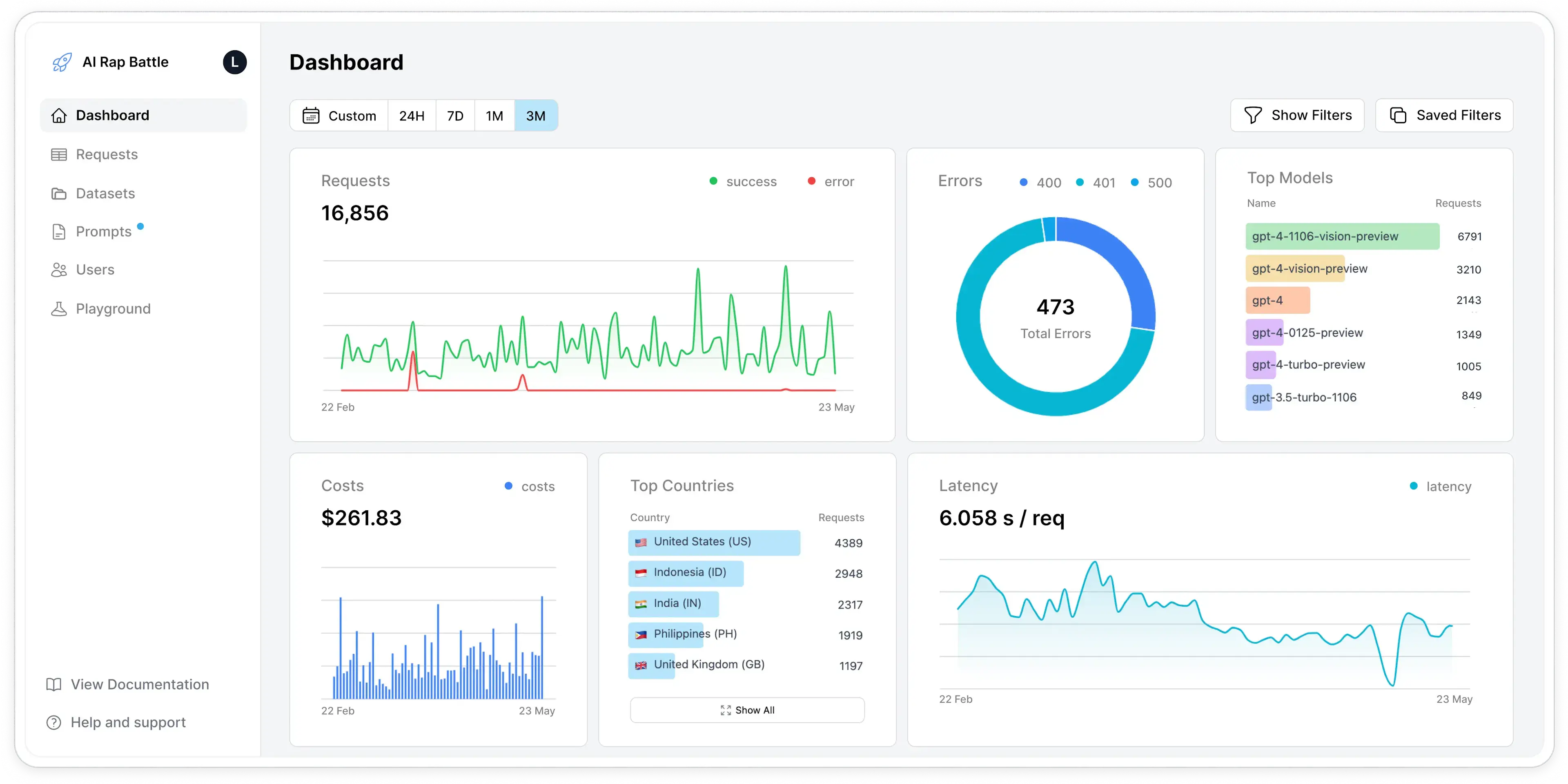
Helicone offers a comprehensive suite of observability features designed for modern AI stacks. The request logging system captures every API call to providers like OpenAI, Anthropic, Gemini, and over 100 others through a unified gateway. Each log includes full payload inspection, making debugging a breeze. The analytics dashboard provides real-time metrics on costs, latency trends, token usage patterns, and error rates across models and users. You can drill down into individual requests, filter by model, user, or time range, and export data for deeper analysis.
The platform also includes prompt experimentation capabilities — test different prompts side by side, compare outputs, and iterate on your prompt engineering. Caching and rate limiting features help optimize costs and prevent abuse, while custom properties let you tag requests with your own metadata (user IDs, sessions, experiments) for rich filtering and segmentation.
Why Self-Host Helicone?
Self-hosting Helicone gives you complete control over your observability data. No logs leave your infrastructure, ensuring sensitive prompt data and proprietary model interactions stay within your security boundary. This is critical for enterprises handling PII, financial data, or internal RAG systems. The self-hosted version includes all features of the cloud offering — logging, analytics, evaluations, caching — without per-request pricing. You scale your observability as your AI application grows, backed by PostgreSQL and your own infrastructure.
Integration with Your Stack
Helicone integrates seamlessly through multiple paths: a lightweight Python SDK (pip install helicone), a Node.js package, direct OpenAI-compatible proxy endpoints, and manual REST API logging. It works with LangChain, LlamaIndex, AutoGen, CrewAI, and any framework that routes through OpenAI-compatible APIs. The one-line integration means you can add observability to existing applications in minutes without code changes — just point your base URL to Helicone's proxy.
Helicone vs Alternatives
Compared to LangSmith, Helicone offers a more generous free tier and full self-hosting capability. Compared to Langfuse, it provides a simpler setup with proxy-based architecture. Compared to Arize and MLflow, Helicone is purpose-built for LLM observability rather than general ML monitoring. Its open-source nature (Apache 2.0) means no vendor lock-in and full customizability.
Conclusion
Helicone is an essential tool for any team building production AI applications. Its combination of deep observability, easy integration, self-hosting freedom, and Apache 2.0 licensing makes it one of the most accessible LLM monitoring solutions available. Whether you're debugging a single chatbot or monitoring a multi-agent system, Helicone gives you the visibility you need to ship with confidence.