KaibanJS: Build Multi-Agent Systems with a Kanban-Inspired Approach
KaibanJS brings a Kanban-inspired visual approach to multi-agent AI orchestration, letting JavaScript developers build and manage agent workflows through an intuitive task-board interface.

What Is KaibanJS?
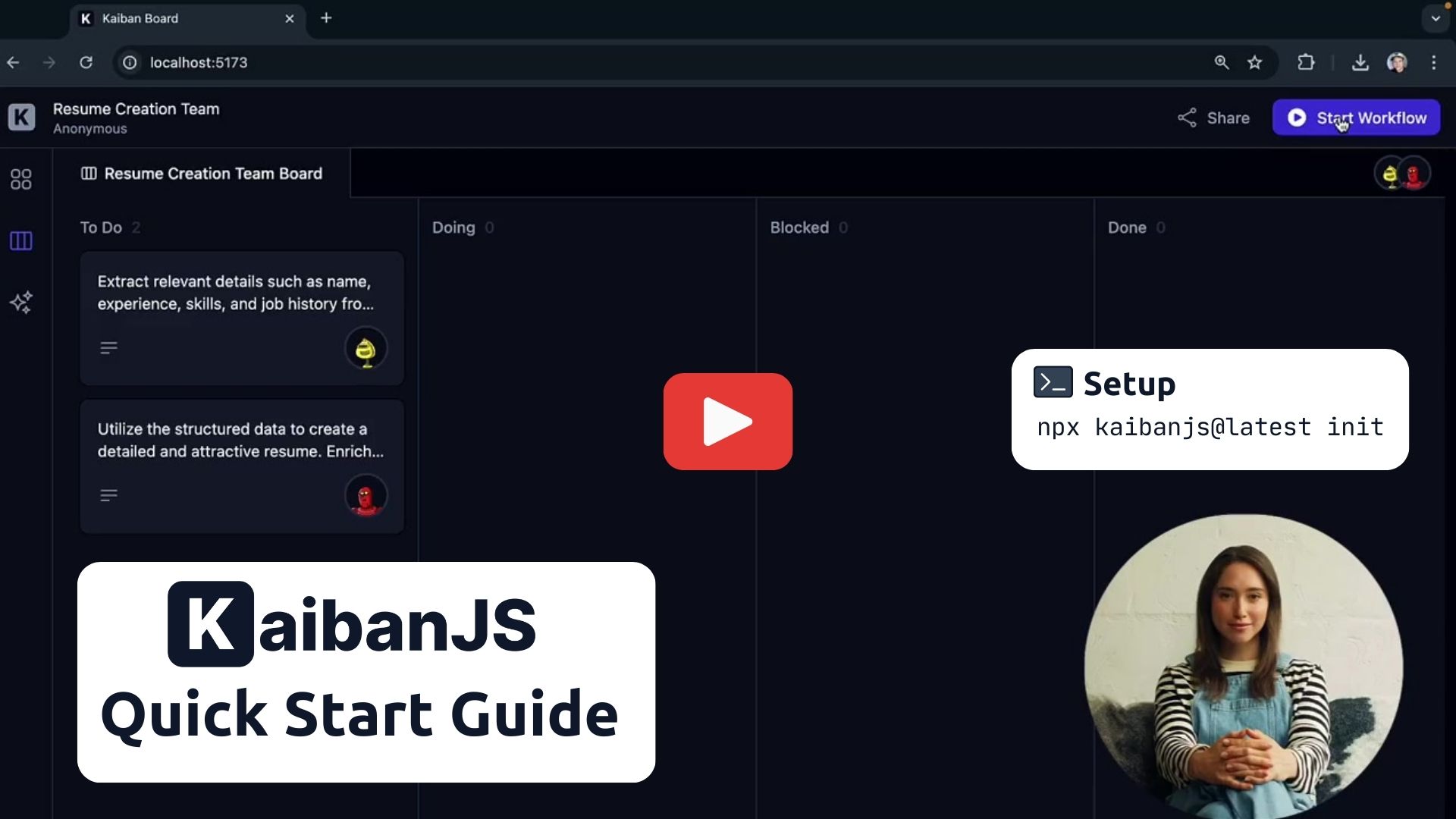
KaibanJS is a JavaScript-native framework for building and managing multi-agent AI systems using a Kanban-inspired visual approach. Unlike traditional agent frameworks that rely on complex graph definitions or YAML configurations, KaibanJS lets you manage agents, tasks, and workflows through an intuitive task-board interface — think of it like Trello for AI agents.
Built entirely in JavaScript and TypeScript, KaibanJS integrates seamlessly with LangChain.js and the broader Node.js ecosystem. It's designed for developers who want to orchestrate multiple AI agents collaborating on complex tasks without leaving their familiar JavaScript environment. With 1,460+ GitHub stars and growing adoption, it's quickly becoming a go-to choice for JS developers entering the agentic AI space.
How the Kanban Model Works for AI Agents
In KaibanJS, each AI agent is represented as a card on a Kanban board. Tasks flow between agents through defined columns — To Do, In Progress, Review, Done — making the entire workflow visible and debuggable at a glance. This visual approach solves one of the hardest problems in multi-agent systems: understanding what each agent is doing at any given moment.
Key Features
- Kanban-Based Orchestration: Visual task-board interface for managing agent workflows, making complex multi-agent systems easy to understand and debug.
- JavaScript-Native: Written entirely in TypeScript/JavaScript — no Python bridges or complex interop needed for JS developers.
- LangChain.js Integration: Works seamlessly with LangChain.js for LLM calling, tool use, and memory management.
- State Management: Built-in state management tracks agent context, task progress, and workflow state automatically.
- Multi-Step Reasoning: Agents can chain together complex reasoning steps, passing results between each other through the task board.
- Tool Integration: Each agent can be equipped with custom tools, APIs, and data sources.
- React-Ready: Built with modern frontend patterns, making it easy to integrate into React/Next.js applications.
Why Choose KaibanJS?
If you're a JavaScript developer looking to build multi-agent AI systems, KaibanJS offers the most natural on-ramp. Unlike frameworks like CrewAI or AutoGen that are Python-centric, KaibanJS lets you work entirely in JS/TS. The Kanban visual metaphor is not just a gimmick — it provides genuine visibility into agent operations that text-based debugging can't match. This makes it especially valuable for teams building production agent systems where understanding agent behavior is critical.
Conclusion
KaibanJS brings the power of multi-agent AI systems to the JavaScript ecosystem with an elegant, visual approach. Its Kanban-inspired design makes agent orchestration accessible, debuggable, and genuinely productive. For any JS/TS developer exploring agentic AI, KaibanJS is well worth a look.