LightRAG: Simple and Fast Retrieval-Augmented Generation - Complete Guide
LightRAG is a lightweight, high-performance RAG framework with 37k+ GitHub stars. Learn about its graph-based knowledge indexing, dual-level retrieval, and how to self-host it.
What Is LightRAG?
LightRAG is a lightweight, high-performance Retrieval-Augmented Generation (RAG) framework published at EMNLP 2025 by researchers at The University of Hong Kong. With over 37,000 stars on GitHub, it has quickly become one of the most popular open-source RAG solutions available.
What sets LightRAG apart is its innovative use of graph-based knowledge indexing. Instead of treating documents as flat chunks of text, LightRAG builds a knowledge graph that captures relationships between entities, enabling much more contextually aware retrieval.
Key Features
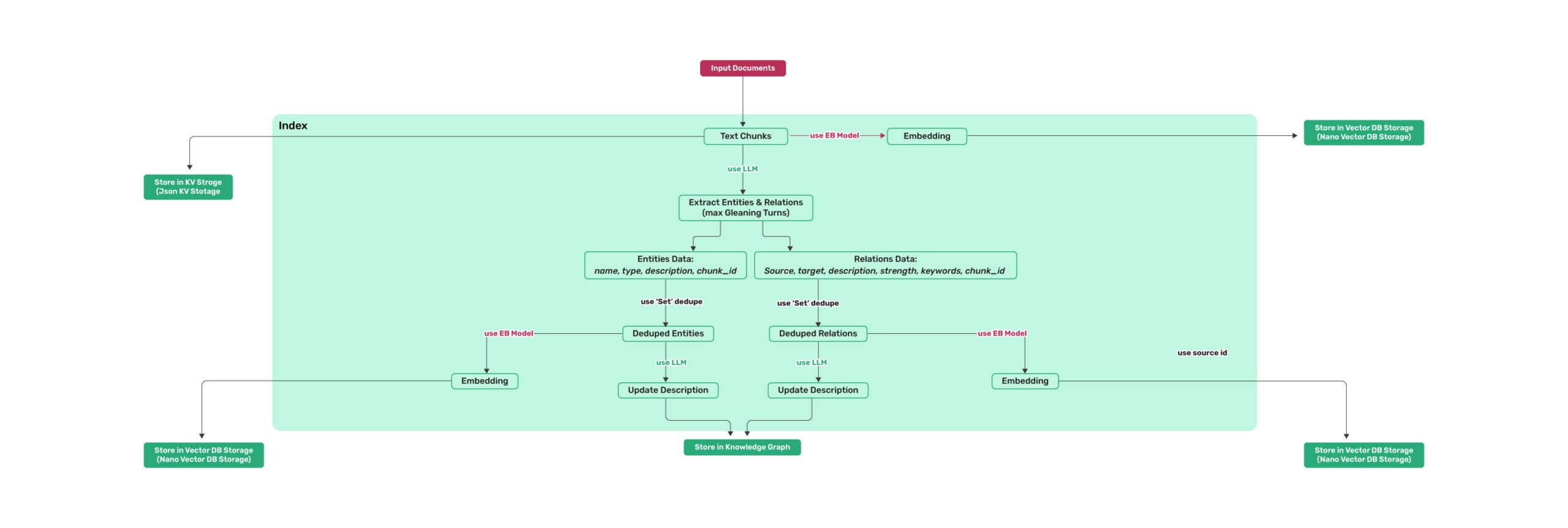
Graph-Based Knowledge Indexing
LightRAG constructs a knowledge graph from your documents, capturing entities, relationships, and their contexts. This graph structure enables more intelligent retrieval compared to naive vector search alone.
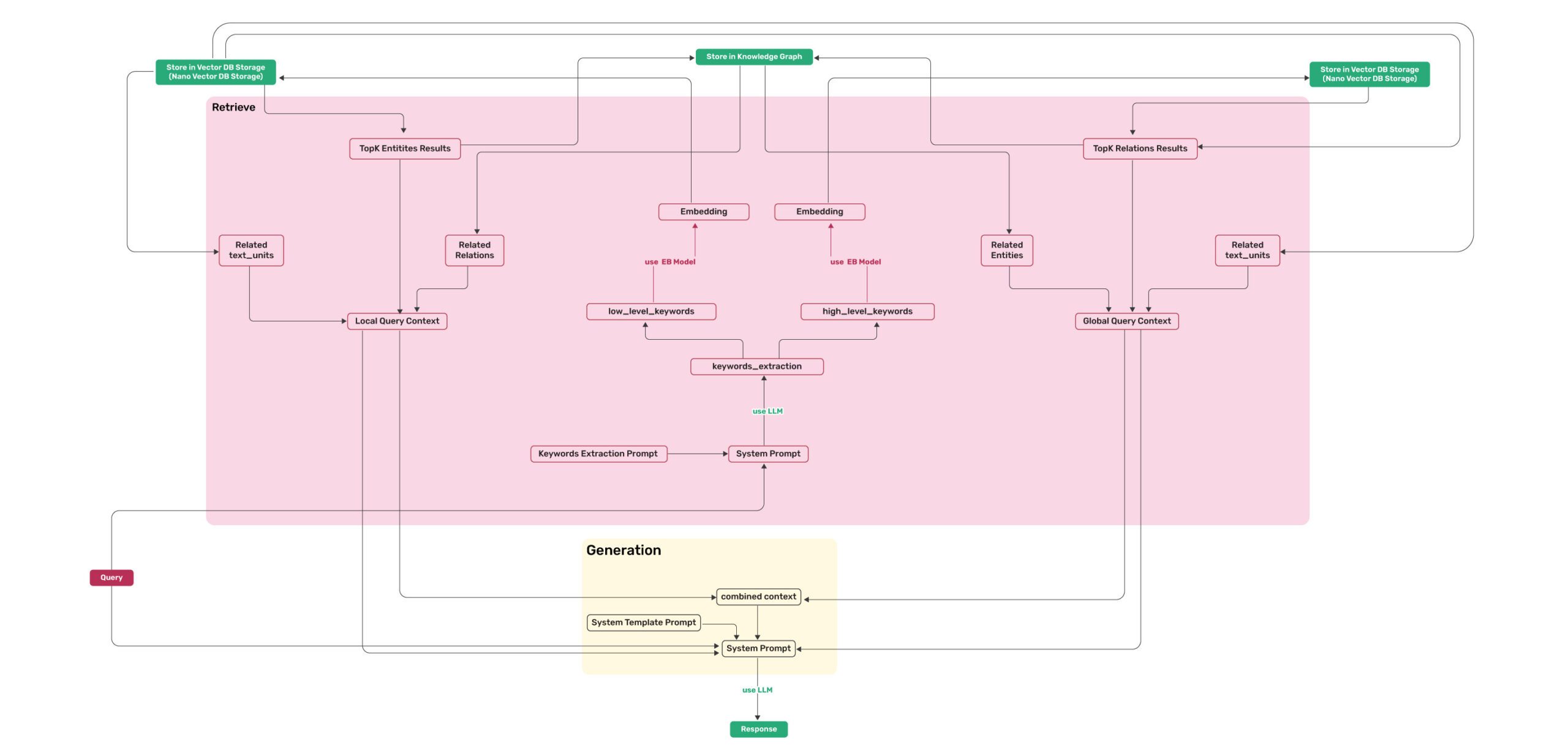
Dual-Level Retrieval
The framework performs retrieval at both the document level (using embeddings) and the knowledge graph level (traversing relationships). This dual approach ensures both relevant documents and their contextual connections are surfaced.
Built-in WebUI
LightRAG ships with a modern WebUI that allows you to upload documents, query your knowledge base, and manage your RAG system from your browser.
Reranker Support
LightRAG supports rerankers that boost performance for mixed queries, set as the default query mode.
Why Self-Host LightRAG?
Self-hosting LightRAG gives you complete control over your data. No documents leave your infrastructure, making it ideal for enterprises handling sensitive information. The GHCR-based Docker image makes deployment simple, and the MIT license means no restrictions.
Conclusion
LightRAG represents a significant leap forward in RAG technology. Its graph-based approach to knowledge indexing delivers more accurate results than traditional chunk-based RAG systems. With an active community and easy Docker deployment, it is an excellent choice for building knowledge-intensive AI applications.