Text Generation Inference Review: Performance, Features, and Verdict
In-depth review of Hugging Face Text Generation Inference (TGI): performance benchmarks, quantization support, strengths, weaknesses, and verdict for self-hosted LLM serving.
Overview
Text Generation Inference (TGI) by Hugging Face is one of the most popular open-source LLM serving solutions, with over 10,800 GitHub stars. It powers Hugging Face's own Inference API and is trusted by enterprises worldwide for production LLM deployments.
Strengths
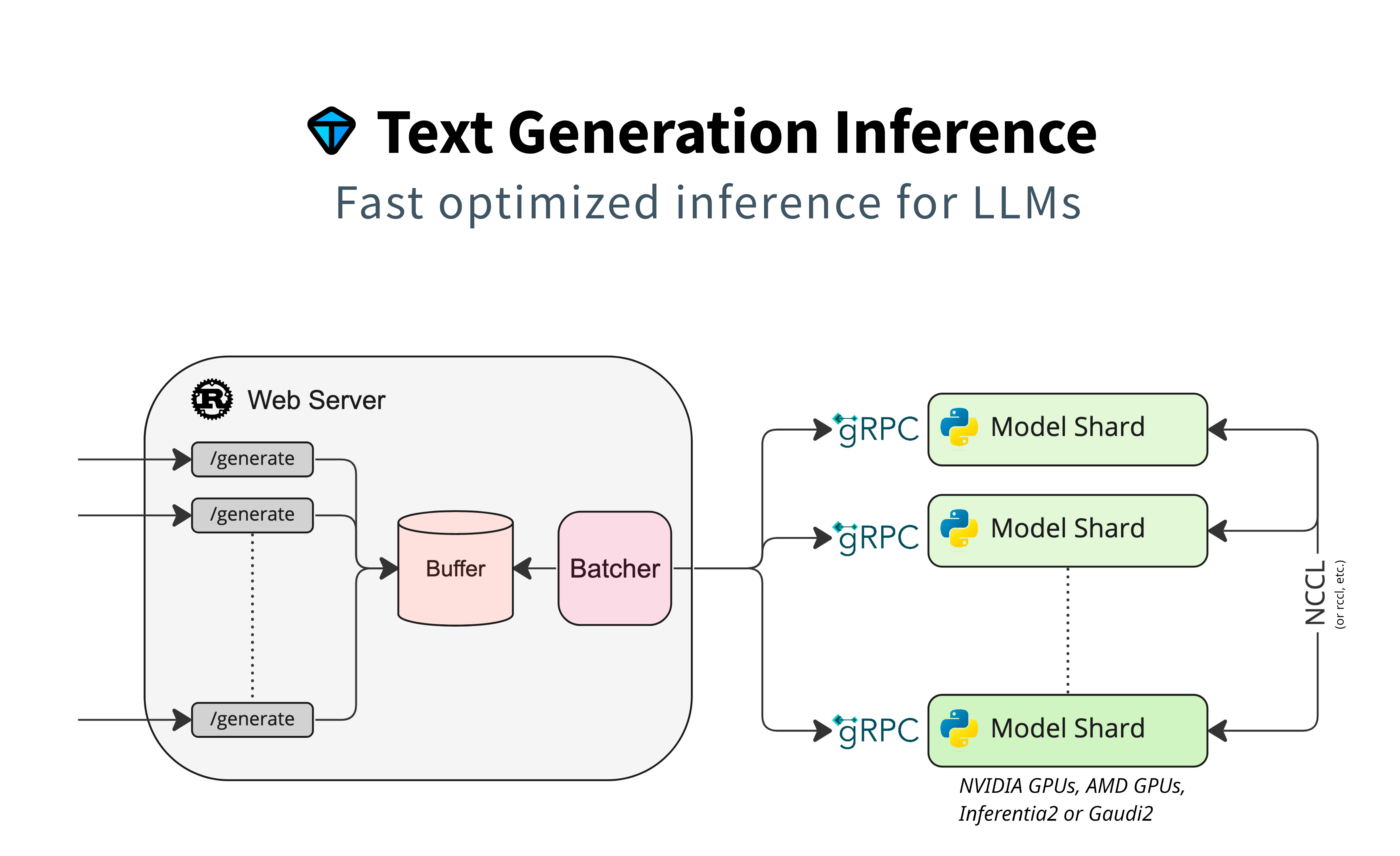
- Exceptional Performance: Built with Rust, TGI delivers superior throughput and latency compared to Python-only solutions. The continuous batching system maximizes GPU utilization, achieving up to 2x throughput over naive implementations.
- Seamless HF Integration: One-command deployment for thousands of models from the Hub. Automatic architecture detection and model downloading make experimentation effortless.
- Advanced Quantization: Native support for bitsandbytes 4/8-bit, GPTQ, AWQ, and EETQ quantization, significantly reducing GPU memory requirements without major quality loss.
- Production Features: Built-in rate limiting, request queuing, Prometheus metrics, health checks, and graceful shutdown make it deployment-ready out of the box.
- OpenAI Compatibility: Drop-in replacement for OpenAI API endpoints, allowing existing tools and libraries to work without modification.
Weaknesses
- GPU-Centric Design: While CPU inference works, TGI is optimized for GPU deployments. CPU-only setups see significantly reduced performance.
- Model Compatibility: Not all Hugging Face model architectures are supported. Some custom or less popular models may require additional configuration.
- Resource Intensive: Running 70B+ parameter models requires multiple high-end GPUs even with quantization, which may be cost-prohibitive for smaller teams.
Verdict: 9/10
TGI is the premier choice for teams in the Hugging Face ecosystem needing a production-grade LLM server. Its Rust architecture delivers a genuine performance advantage over competitors like vLLM and llama.cpp in many benchmarks. The tight Hub integration and enterprise features make it ideal for production AI workloads.
Best for: Production deployments, Hugging Face users, applications needing OpenAI API compatibility.
Consider alternatives if: You need CPU-only inference (llama.cpp), want simpler setup (Ollama), or need cutting-edge optimizations (vLLM with FlashAttention-3).