Getting Started with Guardrails AI: Safe LLM Deployment Guide

What Is Guardrails AI?
Guardrails AI is an open-source Python framework designed to add structural guardrails to large language model (LLM) applications. As LLMs become increasingly integrated into production workflows, ensuring that outputs are safe, accurate, and policy-compliant has become a critical challenge. Guardrails AI addresses this by providing a declarative, verifiable approach to defining input and output guardrails that run before and after every LLM call.
Whether you are using OpenAI, Anthropic, or local models via Ollama, Guardrails AI wraps your LLM calls with a validation layer that can detect PII, check for toxicity, enforce JSON schema compliance, verify code safety, and much more through a simple Python API.
Key Features
Declarative Guardrails: Define guardrails as structured rails using a simple Python specification. Each rail can validate inputs, outputs, or both, with configurable actions on failure.
Guardrails Hub: A community registry of pre-built validators covering anti-hallucination checks, bias detection, sentiment analysis, and regulatory compliance.
Multi-Model Support: Works with OpenAI, Anthropic, Cohere, Hugging Face, and local models via Ollama.
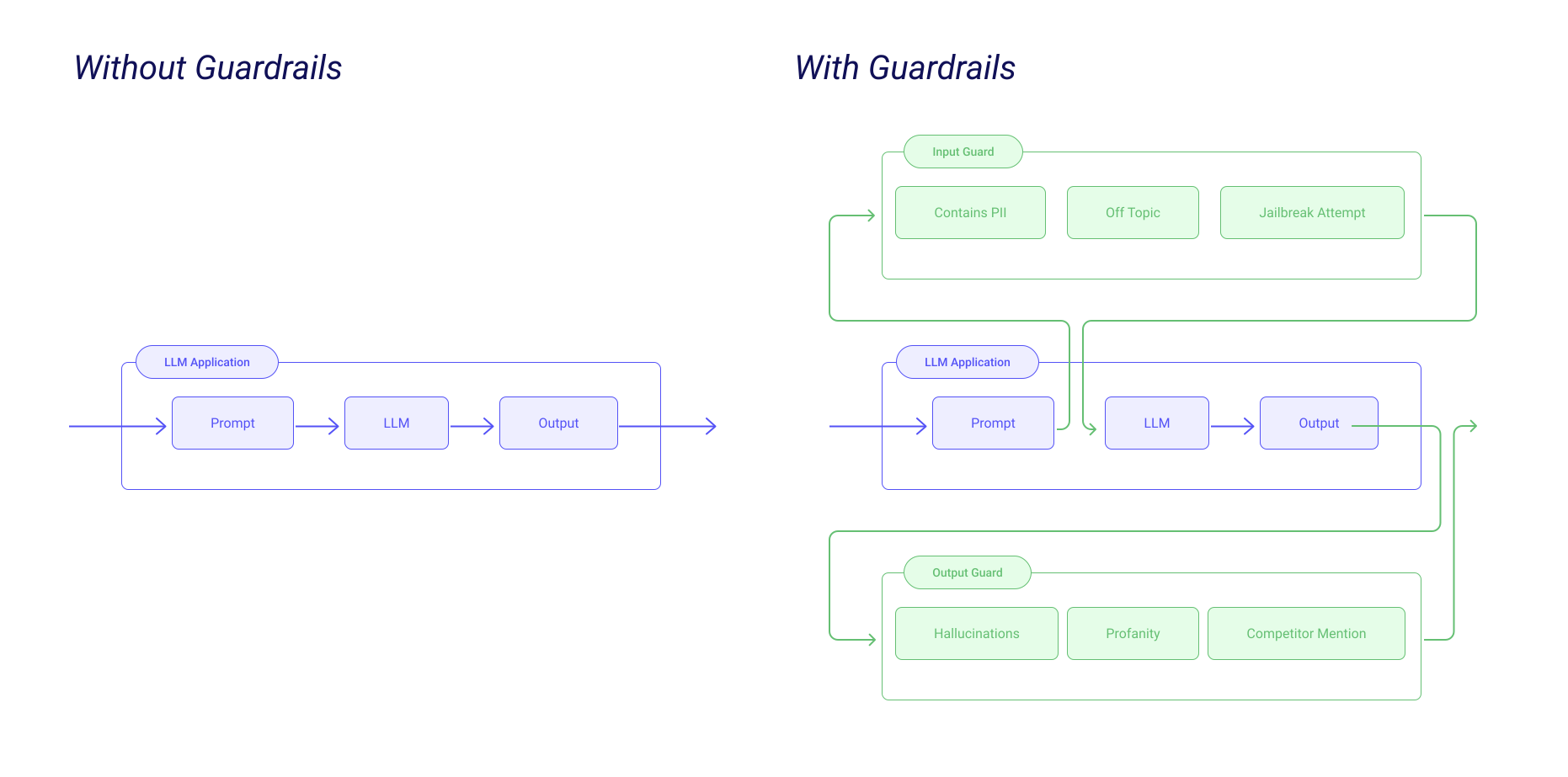
Why It Matters
As organizations deploy LLMs in customer-facing applications, the risks of unvalidated outputs become existential. Guardrails AI provides a systematic, testable layer between your app and the LLM, giving teams confidence to deploy AI in production.
Quick Start
pip install guardrails-ai
import guardrails as gd
guard = gd.Guard.from_rail_string(rail_spec)
Conclusion
Guardrails AI is essential infrastructure for any team deploying LLMs in production. With 7,000+ GitHub stars and Apache-2.0 license, it is the most mature open-source solution for LLM safety.