LaVague Guide: Build AI Web Agents for Browser Automation
A comprehensive guide to LaVague, the open-source Large Action Model framework for building AI Web Agents that automate browser tasks with natural language instructions.
🚀 Want to deploy LaVague yourself?
Docker configs, system requirements, and installation guides — all on one page.
View LaVague Tool Page →What is LaVague?
LaVague is an open-source Large Action Model (LAM) framework that lets developers build AI Web Agents capable of understanding objectives and executing them in a browser. Instead of writing brittle Selenium scripts or Playwright selectors by hand, you describe what you want in natural language — and LaVague handles the rest.
With 6,387 GitHub stars and an Apache-2.0 license, LaVague has quickly become one of the most popular open-source tools for browser automation.
How It Works
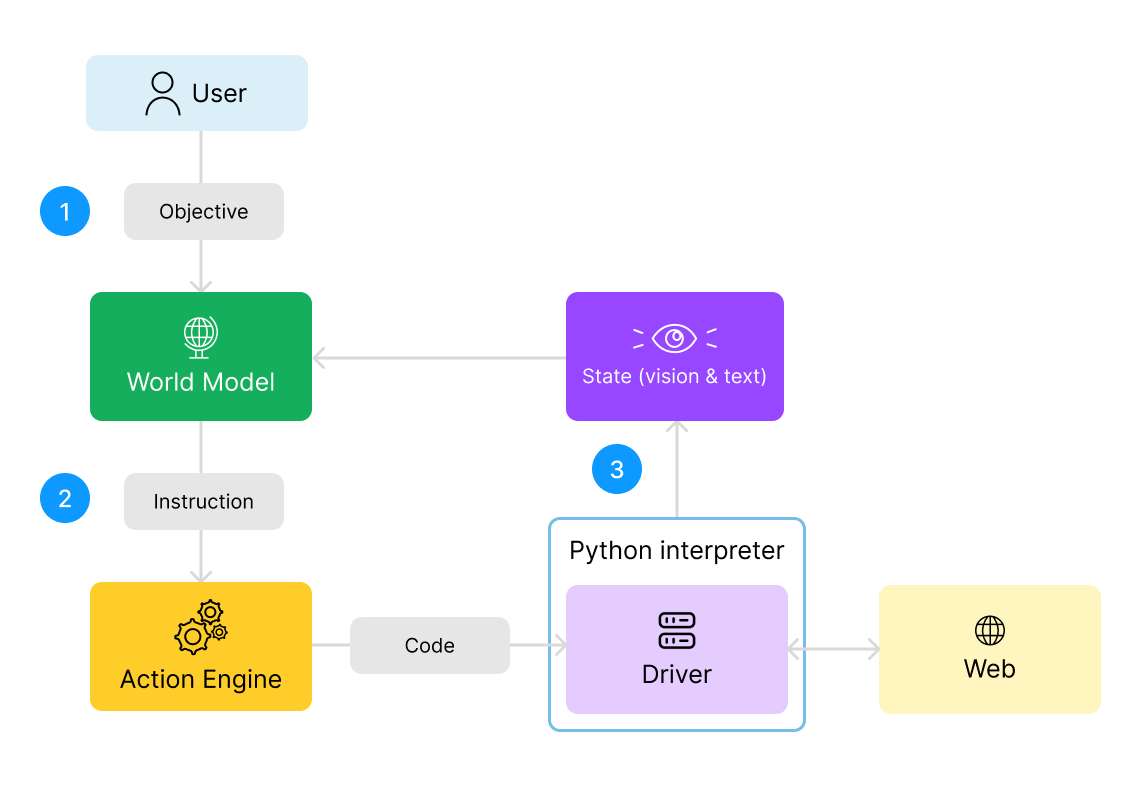
LaVague agents consist of two core components:
- World Model — Takes an objective (e.g., "Go on the quicktour of PEFT") plus the current webpage state and outputs a set of instructions
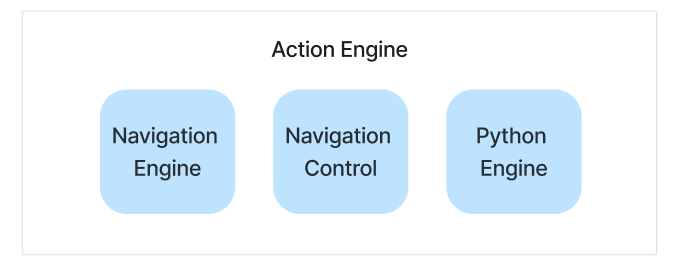
- Action Engine — "Compiles" those instructions into executable code (Selenium or Playwright) and runs it against the browser
This two-stage architecture mirrors how humans browse the web: we look at a page, decide what to do next, then click/type. LaVague automates this loop end-to-end.
Key Features
| ✅ Multiple Browser Drivers | Selenium, Playwright, and Chrome Extension support |
| ✅ Headless Mode | Run agents without a visible browser window |
| ✅ Custom LLM Backend | Default GPT-4o, but fully swappable |
| ✅ Gradio Interface | Interactive web UI for demos |
| ✅ Token Counter | Track costs and token usage |
| ✅ Debugging Tools | Logging and action replay |
| ✅ Chrome Extension | Run agents directly from your browser |
Why LaVague?
Traditional web automation requires fragile CSS selectors, XPath expressions, and constant maintenance as sites change. LaVague's LLM-powered approach adapts to page structure changes automatically — if the button text or layout shifts, the agent adjusts its strategy. This makes it significantly more robust than conventional automation tools for dynamic web applications.
Use Cases
- QA Testing — Automate test writing from Gherkin specs with LaVague QA
- Data Extraction — Pull structured data from complex web pages
- Form Filling — Automate repetitive data entry across multiple sites
- E2E Testing — Run full user journey tests without manual selector maintenance
- RPA — Replace brittle robotic process automation scripts
🚀 Want to deploy LaVague yourself?
Docker configs, system requirements, and installation guides — all on one page.
View LaVague Tool Page →