MetaGPT: The AI Software Company — Multi-Agent Framework That Builds Apps from a One-Line Prompt
MetaGPT simulates an entire software company using AI agents — PM, Architect, Engineer, QA — to turn one-line requirements into complete applications. 69k+ stars.

What Is MetaGPT?
MetaGPT is a groundbreaking open-source multi-agent framework that simulates an entire software company using AI agents. Instead of just one AI assistant answering questions, MetaGPT orchestrates multiple specialized LLM-powered agents — a Product Manager, Architect, Engineer, and QA Engineer — who collaborate to turn a single line of natural language into a complete software product. With over 69,000 GitHub stars, it is one of the most popular agent frameworks in the world.
How It Works
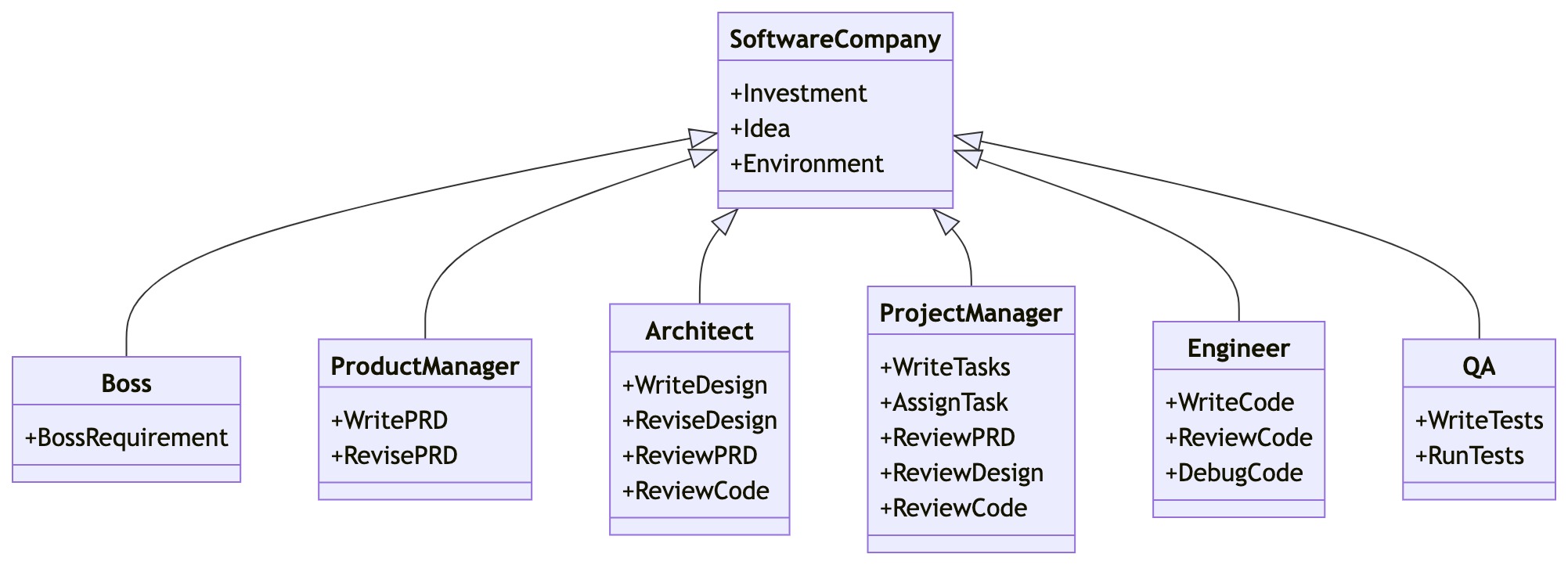
The magic of MetaGPT lies in its role-based architecture. When you give it a one-line requirement like "build a task management app," here is what happens:
- The Product Manager agent generates user stories and competitive analysis
- The Architect agent designs system architecture and data structures
- The Engineer agent writes actual code following the design
- The QA Engineer agent writes and runs tests
Key Features
- Role-based multi-agent collaboration — Each agent has a defined persona, SOP, and tools
- Structured outputs — Generates requirements docs, architecture diagrams, API specs, and source code
- Long-term memory — Agents share context and build on previous work across sessions
- Runs locally — Use with OpenAI, Claude, or local LLMs via Ollama/vLLM
- Docker support — One-command deployment with the official image
Why Self-Host MetaGPT?
Running MetaGPT locally means your code stays private, you can use any LLM backend (including free local models), and you avoid API costs for iterative development cycles. It is perfect for teams that want AI-assisted software design without sending proprietary requirements to external APIs.
Use Cases
- Rapid prototyping from natural language descriptions
- Generating comprehensive project documentation
- Teaching software architecture and design patterns
- Automating boilerplate code generation
- Exploring multi-agent collaboration for complex tasks
Conclusion
MetaGPT represents a fundamental shift in how we think about software development — moving from manual coding to natural language programming where AI agents collaborate like a real engineering team. Whether you are prototyping a new idea, teaching software design, or exploring the cutting edge of multi-agent systems, MetaGPT is an essential tool in your AI stack.