Node-RED: The Low-Code Automation Platform Powering AI & IoT Workflows
What Is Node-RED?
Node-RED is an open-source, low-code programming platform that lets you wire together hardware devices, APIs, and online services through a visual, browser-based flow editor. Developed originally by IBM and now a project of the OpenJS Foundation, it has grown into one of the most widely adopted tools for IoT automation, event-driven workflows, and system integration — with over 23,000 stars on GitHub and a thriving community of contributors.
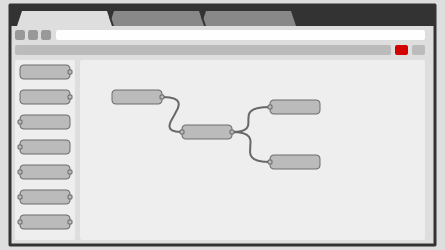
At its core, Node-RED provides a drag-and-drop canvas where you connect pre-built "nodes" — each representing an action or service — into pipelines called flows. These flows can read sensor data, call REST APIs, process messages, trigger email alerts, write to databases, orchestrate AI model inferences, and much more. The result is a visual map of your automation logic that is both easy to understand and quick to modify.
Key Features
Visual Flow Editor: The browser-based editor provides a palette of hundreds of nodes that you can drag, connect, and configure without writing any boilerplate code. JSON-based flow definitions are stored as plain text, making them version-controllable and portable.
Extensive Node Library: The core library includes nodes for HTTP requests, MQTT, TCP/UDP, file I/O, WebSockets, and email. The community has contributed thousands of additional nodes covering everything from AI/ML integrations to Slack, Twitter, and industrial protocols like Modbus and OPC-UA.
AI & Machine Learning: Node-RED integrates seamlessly with AI services. You can call OpenAI, Hugging Face, TensorFlow.js, or ONNX models directly from flows, making it an ideal glue layer for AI-powered automation pipelines.
Built on Node.js: Because Node-RED runs on Node.js, it inherits the vast npm ecosystem. You can write custom functions in JavaScript, run them inside flow nodes, and extend the platform with any npm package.
Why Self-Host Node-RED?
Self-hosting Node-RED gives you complete control over your automation infrastructure. You own all data that flows through your pipelines — no third-party cloud dependency, no usage limits, no vendor lock-in. Deploy it on a Raspberry Pi for home automation, on a VPS for production workflows, or in a Kubernetes cluster for enterprise-scale event processing. The Docker image makes deployment a one-command affair, and data persistence is handled through simple volume mounts.
AI Integration Use Cases
Node-RED shines as an AI orchestration layer. Build a flow that accepts webhook input from an app, sends the data to an LLM for analysis, stores results in a vector database, and returns a formatted response — all visually. Connect face-detection models to security cameras, wire sentiment analysis into customer feedback pipelines, or build an automated content moderation system using Hugging Face models — all without writing a single line of glue code.
Conclusion
Node-RED is an essential tool for anyone building connected systems. Its low-code approach drastically reduces development time for automation and integration tasks, while its extensibility and self-hosted nature make it suitable for everything from hobbyist home automation to enterprise-grade event-driven architectures. With the Docker image, you can be up and running with your first flow in under two minutes.