ToolJet Review: Why This Open-Source Low-Code Platform Stands Out in 2026
An in-depth review of ToolJet — the open-source low-code platform with AI-powered features, self-hosting, and 38k+ GitHub stars. How it compares to Retool, Budibase, and Appsmith.

Overview
In the crowded low-code and internal-tools space, ToolJet has carved out a distinct identity. While Retool dominates the proprietary segment and alternatives like Budibase, Appsmith, and NocoDB target similar use cases, ToolJet stands apart with its AI-native approach, self-hosting first design, and genuinely open-source community edition. With over 38,000 GitHub stars and adoption by teams from startups to Fortune 500 companies, ToolJet is worth a serious look for anyone building internal applications in 2026.
Strengths
- True Self-Hosting Freedom: ToolJet deploys via a single Docker image with no proprietary dependencies. You own your data and infrastructure completely. The AGPL-3.0 license ensures the community edition stays free and open.
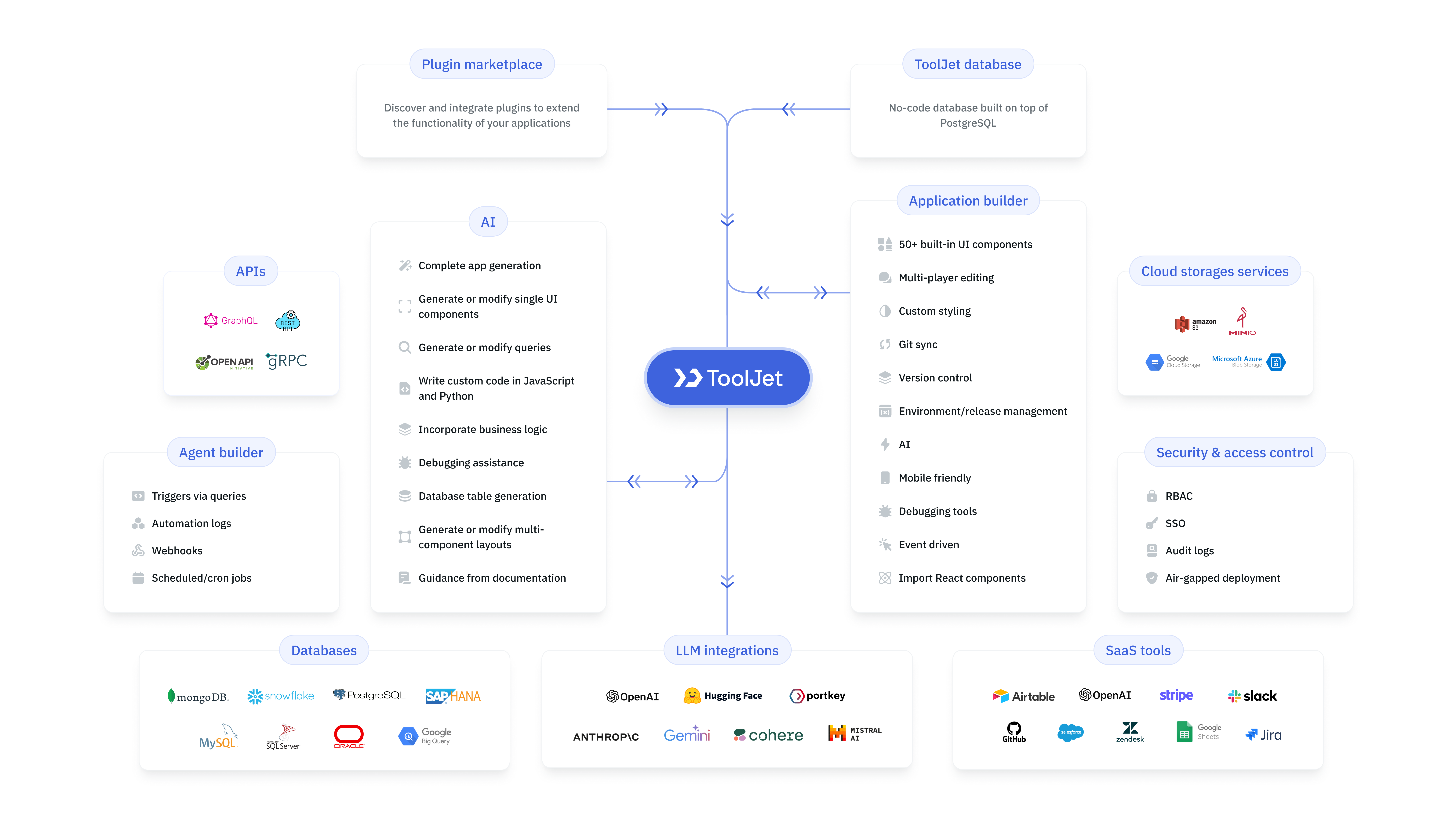
- AI-Powered Builder: The AI query builder lets you describe queries in natural language — it generates SQL, REST API calls, and even transforms data on the fly. The agent builder goes further, enabling complex multi-step automations with AI decision-making.
- Rich Component Library: 60+ responsive components including tables with inline editing, charts (bar, line, pie, scatter), kanban boards, calendars, maps, progress bars, forms with validation, and file uploads. Each component is customizable with JavaScript.
- Built-in Database: Unlike Retool which relies entirely on external data sources, ToolJet includes its own PostgreSQL-backed no-code database. This eliminates the need to set up and configure a separate database for prototyping.
- Multiplayer Collaboration: Real-time collaborative editing means multiple team members can work on the same app simultaneously — a feature typically found only in enterprise SaaS tools.
- Extensive Integration Library: Pre-built connectors for PostgreSQL, MySQL, MongoDB, Redis, Elasticsearch, Firebase, Supabase, Stripe, Slack, Discord, Google Sheets, Google Cloud, AWS, Azure, and 80+ more services.
Weaknesses
- Learning Curve for Complex Workflows: While simple CRUD apps are quick to build, multi-step workflows with conditional logic and agent interactions require understanding ToolJet's run-js and transform-query system.
- Mobile Responsiveness: The apps are responsive but not truly mobile-first. Building a production mobile experience requires additional effort.
- Enterprise Features: SSO, audit logs, and advanced permissions are in the enterprise tier. The community edition covers most needs for small teams but larger organizations may need to upgrade.
How It Compares
| Feature | ToolJet | Retool | Budibase | Appsmith |
|---|---|---|---|---|
| Self-Hosted | ✅ Free | 💰 Premium | ✅ Free | ✅ Free |
| AI Query Builder | ✅ Built-in | ❌ | ❌ | ❌ |
| Built-in Database | ✅ Yes | ❌ | ✅ Yes | ❌ |
| Agent Builder | ✅ Yes | ❌ | ❌ | ❌ |
| License | AGPL-3.0 | Proprietary | GPL-3.0 | Apache-2.0 |
| GitHub Stars | 38k | N/A | 24k | 35k |
Verdict
ToolJet earns a strong recommendation for teams that value self-hosting, want AI-assisted development, and need to ship internal tools quickly. Its combination of a polished visual builder, built-in AI features, and genuinely open licensing makes it the best all-around choice in the open-source low-code space today. For small teams building admin panels and dashboards, the community edition is more than sufficient. For larger enterprises, the paid tier adds SSO and audit logs while keeping the same core experience.
Who Should Use ToolJet?
- Startups & SMBs: Ship customer-facing admin panels, subscription dashboards, and operational tools without hiring a full dev team
- Data Teams: Build interactive dashboards connected to your data warehouse or API endpoints
- Operations: Automate approval workflows, ticket management, and reporting
- AI Enthusiasts: Leverage the agent builder to create AI-powered automation pipelines